My Ramen unlocks.
Kitchen essentials.
Serving Staff, per-shop World Settings and new controls change several launch-week procedures. Read the current update or open the Serving Staff guide, thief toggle and PNG reload instructions.
My Ramen, dish-clearing staff and new unlocks
Use these official changes when an older preview or guide disagrees with your game. Each answer names the update it comes from; our planning suggestions elsewhere on this page are not measured game rules.
When does the My Ramen tutorial appear?
From Shop Lv.4, under v0.1.50.17746. The October 10 update moved its starting level down from Lv.12. The prompt can appear on the morning of the next business day after you reach the level. If it overlaps with the Staff prompt, Staff takes priority. Reaching Lv.4 is therefore not a promise of an immediate pop-up.
If it has not appeared, note your version, shop level, business day and active tutorial before reporting the problem. Those details distinguish a timing question from a possible progress bug. Official tutorial changes →
What do dish-clearing staff handle?
The Day 1 update, v0.1.48.17626, adds help with dishes, trays and empty drink bottles. You can see a worker’s waiting position when placing their dishwasher. The same update lets you throw dirty dishes into its plate rack and addresses workers stopping after a failed collection or return.
For a solo shift, observe whether dirty-dish collection is your bottleneck before changing the layout. For co-op, agree who returns clean supplies to service using the shift planner. These are workflow suggestions; the patch does not establish a best hiring order or wage calculation. Official staff changes →
What level unlocks Tantanmen and Garlic Chives?
| Purchase or order | Shop level |
|---|---|
| Buy Tantan Tare and Garlic Chives | 26 |
| Chicken- or pork-broth Tantanmen orders | 26 |
| Beef-broth Tantanmen orders | 28 |
These are separate purchase and order gates, not a complete recipe or shop-level chart. A broth-specific order can have a different requirement from buying its ingredients. Official Tantanmen table →
How do I stop a cutting board moving?
In the Day 1 update, aim at an already placed cutting board and right-click to secure or release it. Ingredients can still be placed and cut while the board is secured. Official cutting-board instructions →
Official patch notes checked 12 October 2026. These are developer-documented changes, not our release-build playtests. See the update guide for language and multiplayer changes.
Four jobs to keep in view
Prepare ingredients, cook, serve customers and clean up. These are the recurring jobs described in Wild Dog’s official overview. Think of a shift as work passing between those jobs: cooking needs supplies, service needs finished food, and used spaces need attention.
The cards below separate what the official scene shows from a handoff your group can agree. The handoff notes are our planning suggestions. For object-by-object labels, use the linked picture guide; for assignments by group size, use the shift planner.
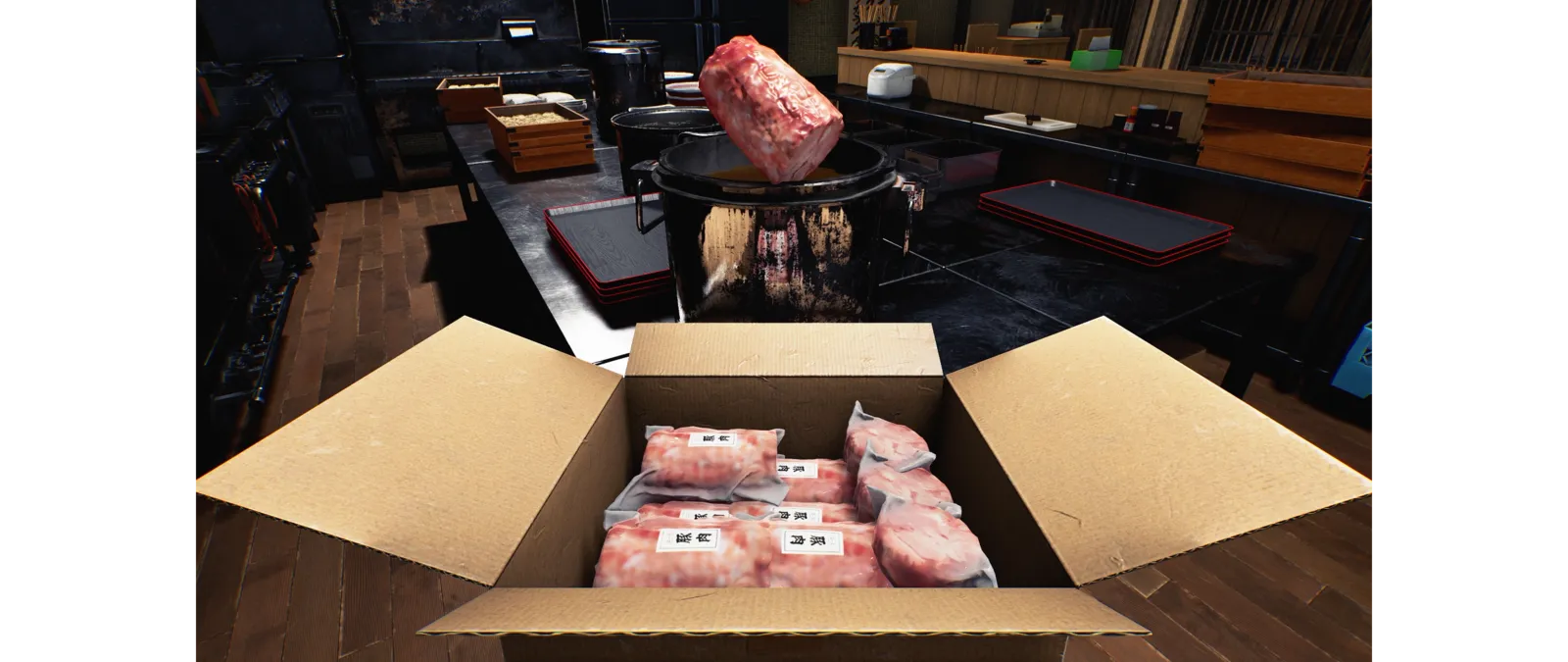
Supplies & preparation
This is the supply side of the shop: ingredients and preparation belong here, before a finished bowl reaches a customer. The pictured packages and pots help distinguish this work from serving.
- A handoff to agree
- Name the ingredient and the work area when asking for supplies. Agree where to put a delivery so the person cooking knows it has arrived.
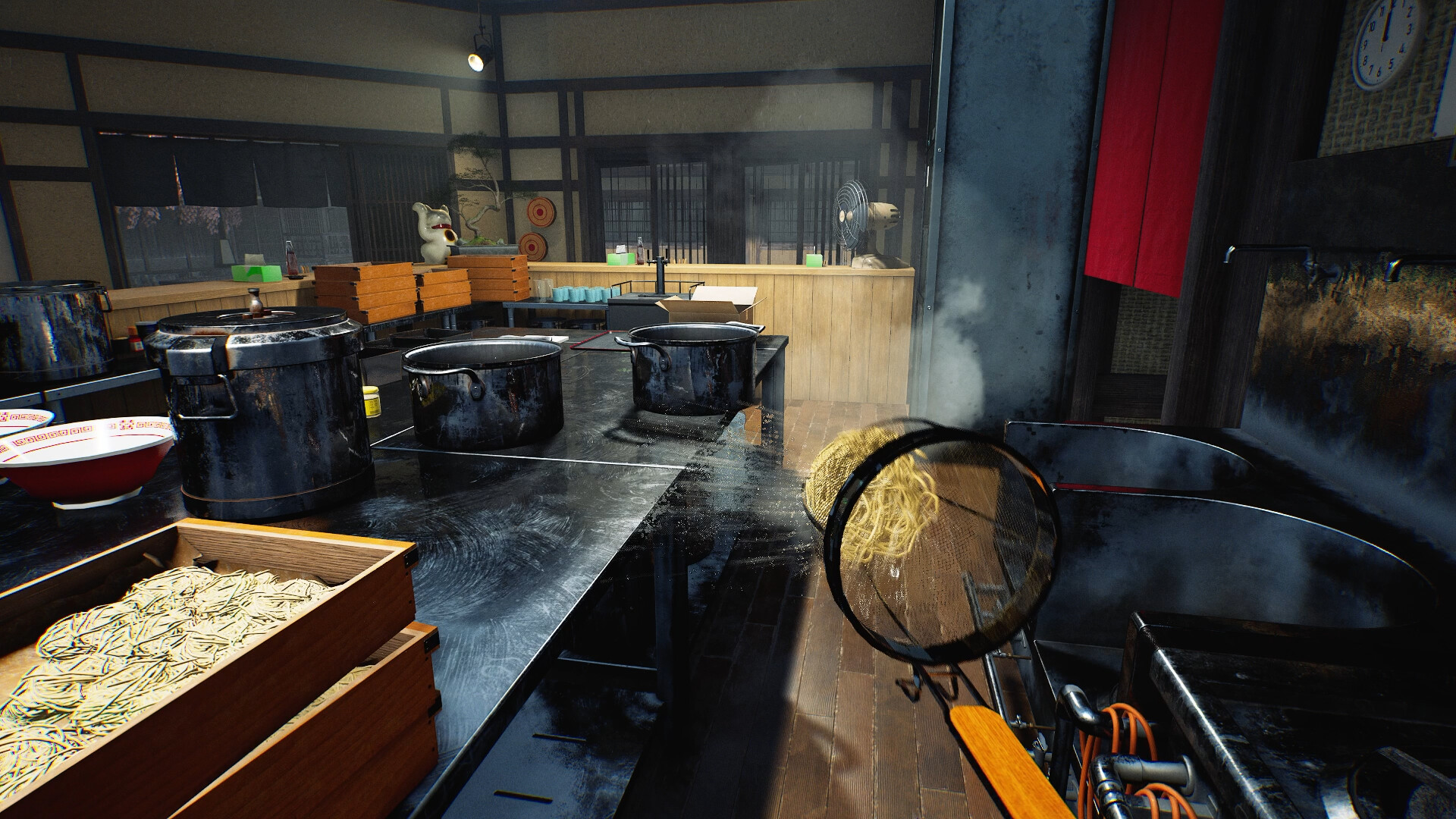
Noodles & hot equipment
Read this as a group of objects: a noodle supply, a handled strainer and steaming cooking equipment. Recognising all three is more useful than treating the strainer alone as the whole station.
- A handoff to agree
- Separate a request for more noodles from a call that a dish is ready. The person bringing ingredients needs a different instruction from the person serving.
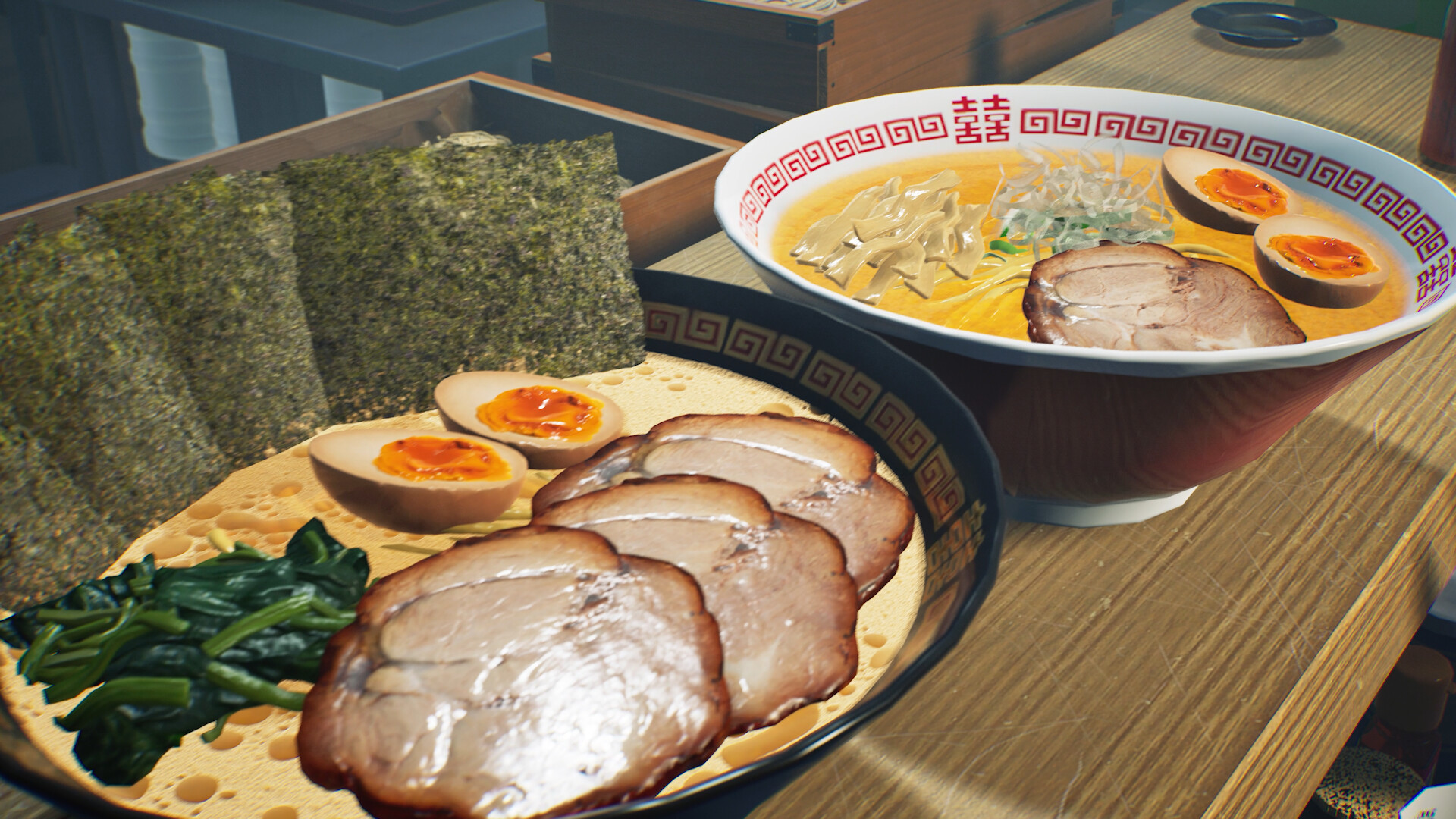
Bowls & menu ideas
Bowl assembly and menu design concern what is being served. The official pictures show differences in toppings and presentation; they do not supply the quantities for a recipe.
- A handoff to agree
- Agree how to identify the order and where a completed bowl will wait. When experimenting with presentation, tell the group which bowl is the experiment.
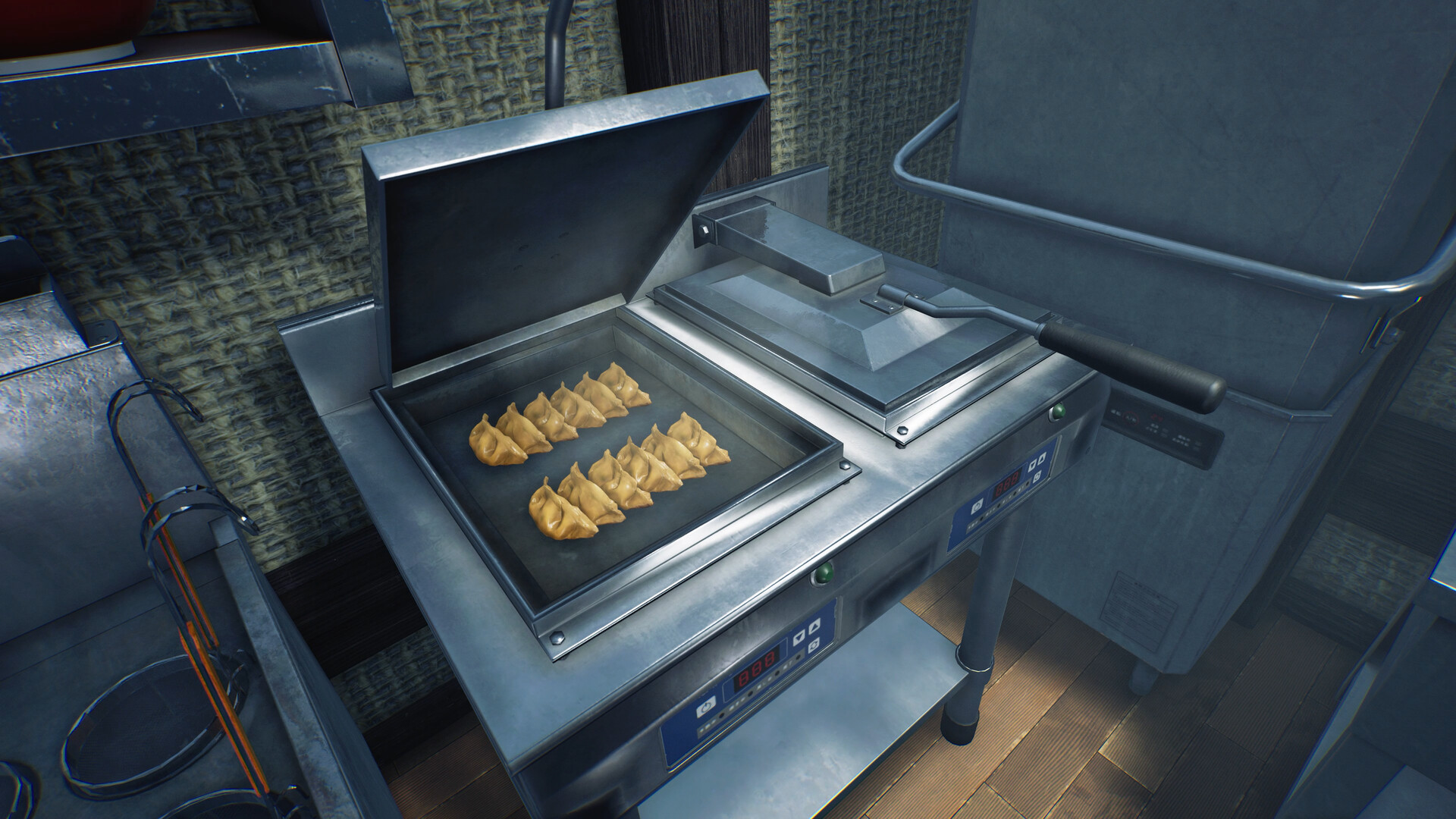
Gyoza & side orders
The gyoza cooker is a separate piece of equipment from the noodle setup. Use its wide rectangular cooking surface and hinged lid to recognise it in the official scene.
- A handoff to agree
- If side orders are available in your session, name a person to watch that station and a person to tell when food is ready. Do not assume the noodle cook is already covering it.
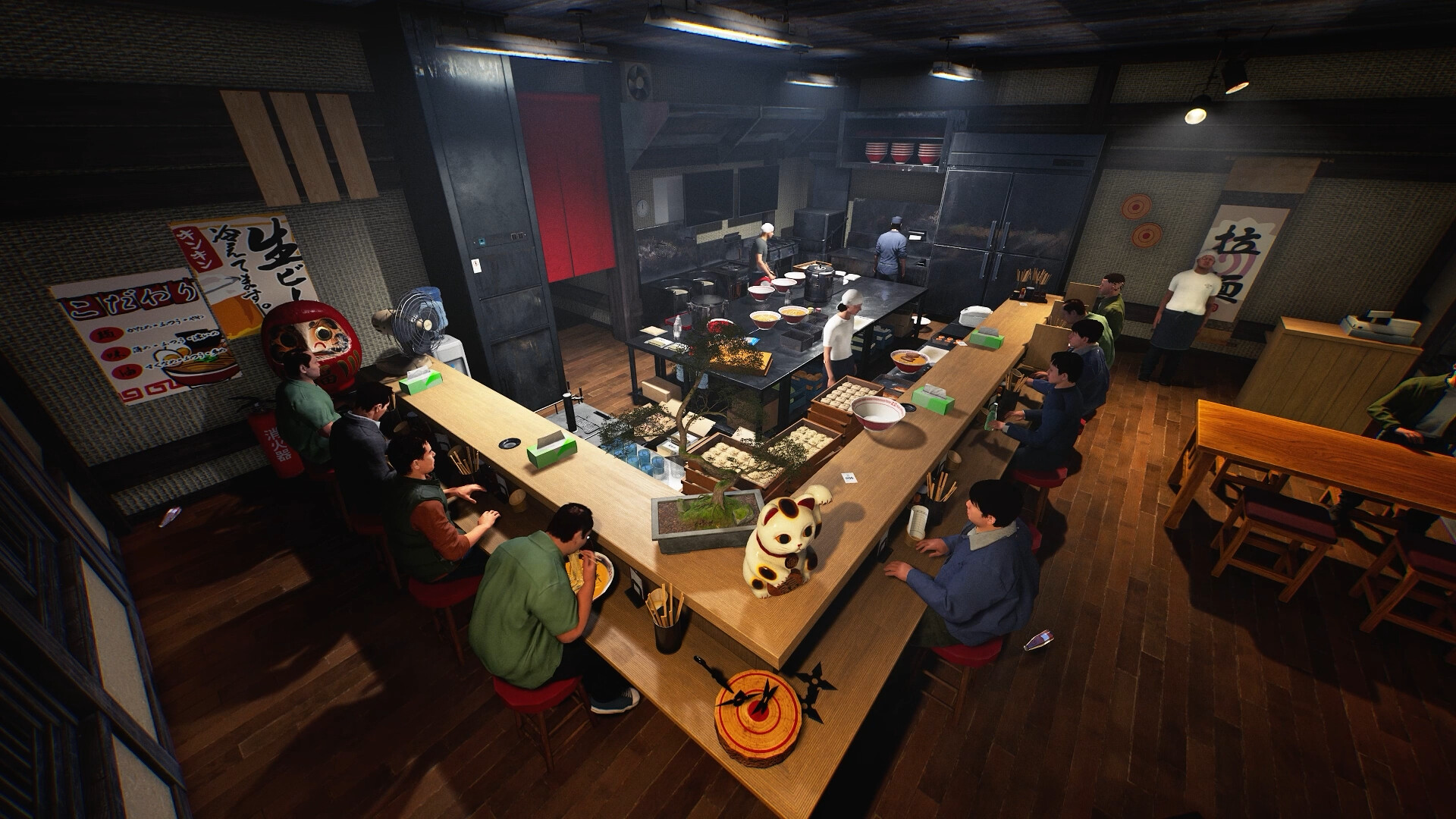
Layout & service
Service connects the workspace with the customer-facing counter. Read the picture from the centre outward: equipment and worktables inside, counter at the edge, customers beyond it.
- A handoff to agree
- Choose one place for completed dishes and distinguish it from supplies or items to clear. This is a team convention to try, not a game-defined zone or proven fastest layout.
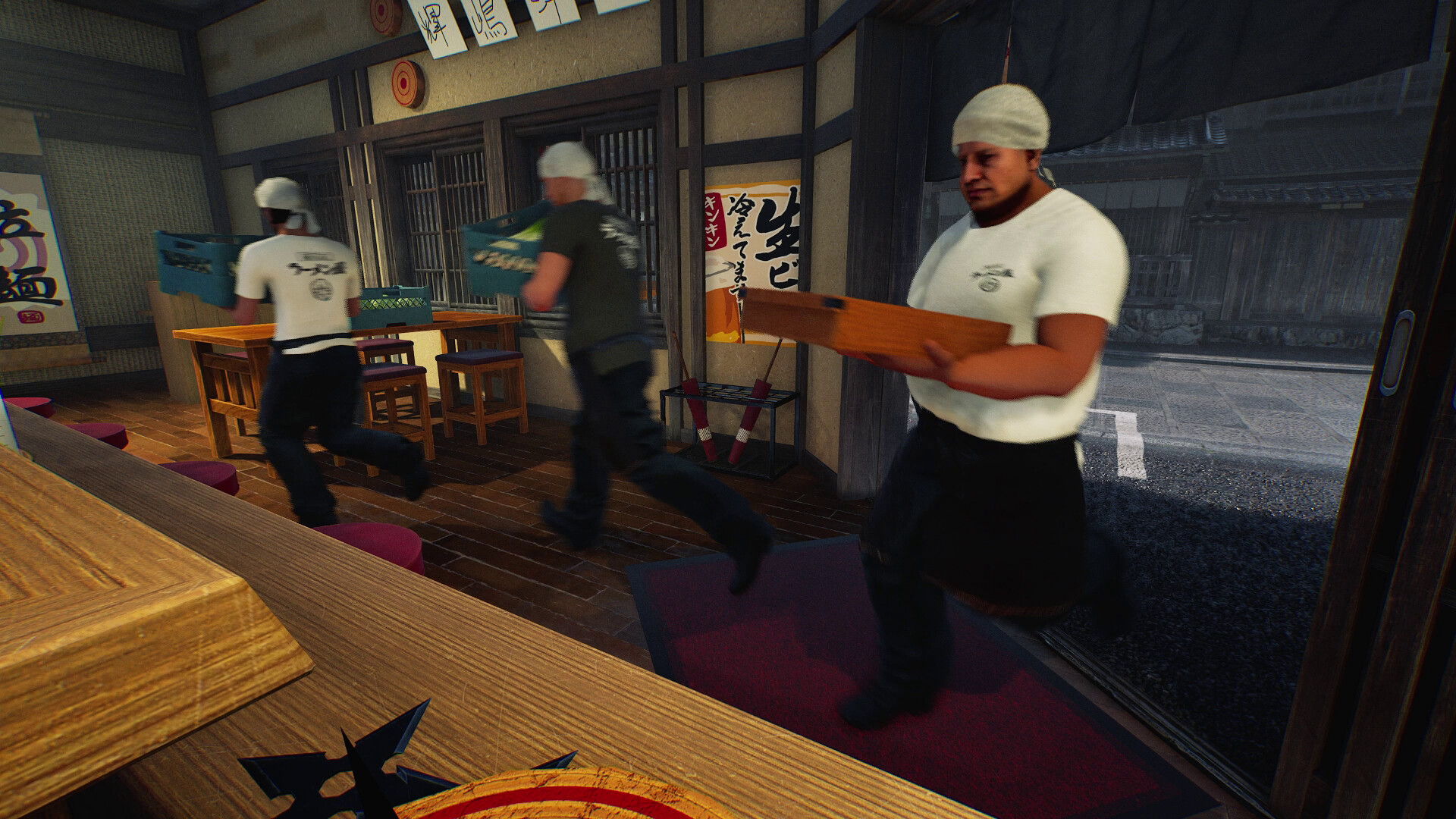
Shared work & solo staff
Preparation, cooking, service and cleanup are all part of the announced work. They are responsibilities to cover, not fixed character classes. A small group can combine responsibilities.
- A handoff to agree
- For every job, agree who notices when help is needed and who can switch over. Use the shift planner to turn the jobs on this page into a starting allocation for your group.
Read a dish beyond its toppings
A striking bowl is only one part of Japanese Ramen Simulator’s cooking system. Wild Dog’s feature announcement describes texture, temperature, flavour and delivery time alongside the physical arrangement of toppings. Separate these questions when deciding what to change in a dish.
| Part of the order | What the developer highlights | A useful comparison to make |
|---|---|---|
| Noodles | Their texture after cooking. | Keep noodle preparation notes separate from how the finished bowl looks. |
| Soup | Temperature, and the aroma and umami contributed by ingredients. | Distinguish a temperature change from a change to the ingredient combination. |
| Toppings | Physics-based placement gives bowls different appearances. | Compare arrangement separately from which ingredients you used. |
| Service | The time taken to deliver an order. | Notice whether a delay happens during preparation, cooking or the handoff to service. |
| Gyoza | The dumplings’ browning. | Give the side station its own attention instead of judging it by the noodle task. |
| Beer | The balance between the drink and its foam. | Look at both parts of the pour; a full-looking glass alone does not describe that balance. |
| Rice bowls | Ramen ingredients can become toppings for dishes such as Char Siu Don. | Include those shared ingredients when discussing supplies for the whole menu. |
The last column is our suggested way to organise observations. Choose one question first—for example, presentation or the wait before service—and record the change you make. Keeping the other choices steady makes your notes easier to compare. It does not establish a winning recipe or a numerical target.
For a critic visit, use the critic reference to keep its announced flavour and topping considerations in context. Use the shift planner when the problem is who covers a station.
Official descriptions checked 30 September 2026: Steam’s cooking and side-menu sections and Wild Dog’s original announcement. This comparison explains announced systems; it is not a release-build test.
Turn “I need help” into a clear handoff
Use a short callout that names the object or place and the next job. These examples are phrases for people playing together, not voice commands recognised by the game.
| Example callout | What the group should agree |
|---|---|
| “Noodles needed at the hot station.” | Who brings supplies, and where that person leaves them. |
| “This bowl is ready at our handoff spot.” | Who takes over service, and how they identify the order. |
| “The counter needs clearing.” | Who covers cleanup while someone else stays on unfinished cooking. |
After a shift, pick one handoff that caused confusion and change that agreement first. Changing one agreement gives the group a clear comparison; it does not establish a measured efficiency gain.
What this reference does not establish
The job map helps organise a session. Officially documented controls and unlocks appear above; recipes, costs and measured outcomes still require evidence from a playable build.
| Question | What is available here | What a reliable answer still needs |
|---|---|---|
| How do I cook this order? | Pictures of the equipment and ingredients. | Actual interaction prompts, ingredient quantities and cooking steps in a named build. |
| Which recipe earns the most? | Examples of bowl appearance only. | Ingredient costs, selling prices and repeated results for the same order. |
| Where should I put equipment? | A pictured layout and suggested handoff convention. | A measured comparison using the same orders and team size. |
| What can solo staff do? | Day 1 notes document dishes, trays and empty-bottle clearing. | Hiring costs, limits and actual performance observed in play. |
For other decisions, see decoration, My Designs and expansion, announced shop events and tools, or solo and online play options.
Sources & scope
The recurring jobs come from the developer’s game overview. Object descriptions come from the official Steam listing and screenshot gallery, with an individual credit beside each image. The handoffs and callout examples are our editorial suggestions; they do not claim hands-on testing or measured results. Read the evidence policy.