The counter, worktables and bowl shelf
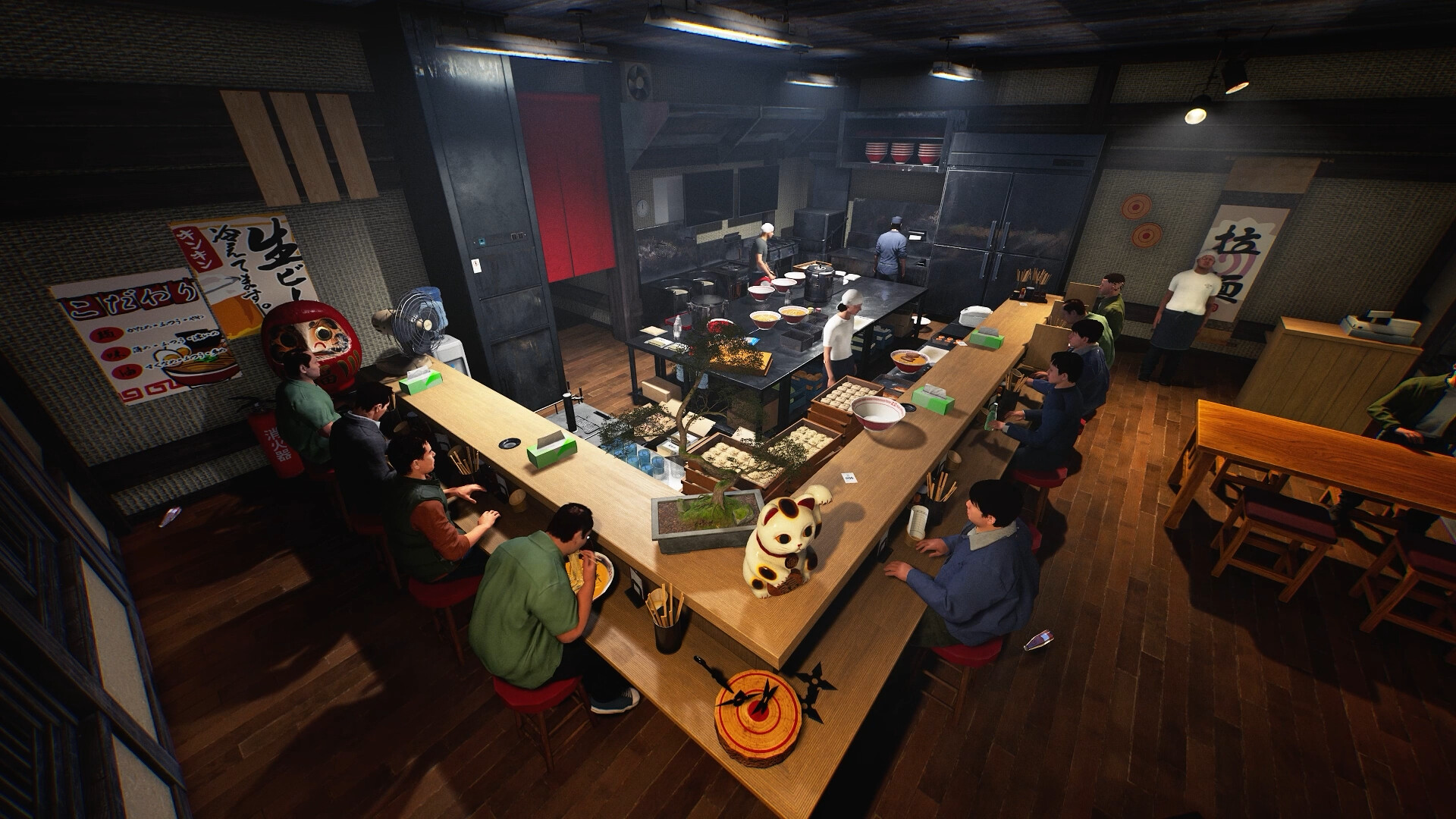
Where are the counter, worktable and bowls?
Select a number to read the matching description.
The customer counter
The broad wooden counter runs between the seated customers and the central workspace. Use its edge to distinguish the dining area from the equipment inside it.
Back to image label 1 ↑The central metal worktable
Pots, bowls and small containers occupy the metal table inside the counter. Spot this shared workspace before looking for an individual utensil.
Back to image label 2 ↑Bowls on the back shelf
Stacks of red-and-white bowls sit high on the rear wall, beside the tall metal cabinets. Their shape and colour make this shelf a useful landmark when reading the room.
Back to image label 3 ↑
Read the scene
Read the room from the outside in. Customer seats follow the wooden counter, while pots, trays and bowls fill the central metal worktables. The red-and-white stacks at the back mark a separate place for bowls. This view brings the dining space, preparation area and cooking equipment into one picture; their positions help explain how the shop’s different jobs share the room.
Understand layout and service →Packaged ingredients beside the cooking pots
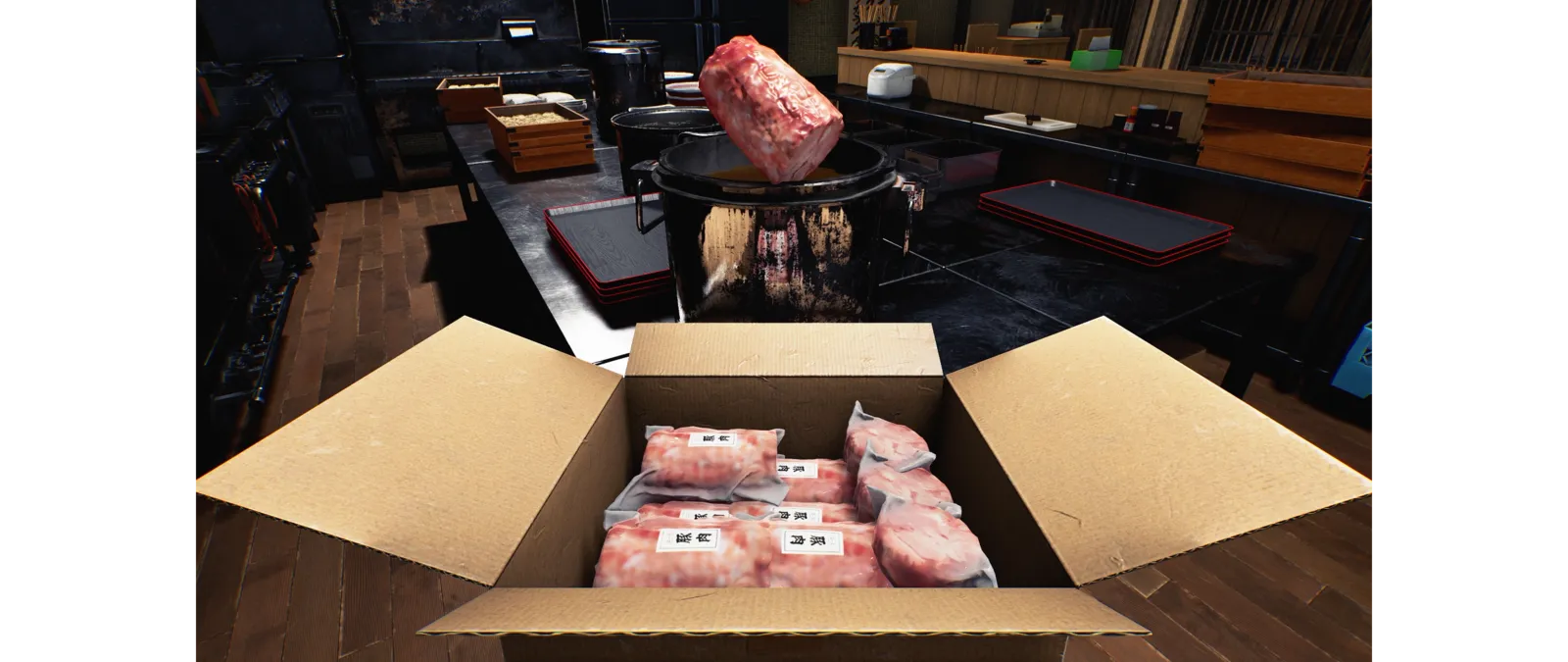
Find the supplies, pot and serving trays
Select a number to read the matching description.
Wrapped meat
Individually wrapped pieces of meat fill the open cardboard box in the foreground. The packaging distinguishes these supplies from the loose ingredients near the cookware.
Back to image label 1 ↑The large metal pot
A large open pot stands on the worktop behind the box. Its deep metal sides distinguish it from the shallow trays alongside it.
Back to image label 2 ↑Stacked serving trays
Dark rectangular trays with red edges are stacked to the right of the pot. Look for their flat surfaces and matching outlines.
Back to image label 3 ↑
Read the scene
The open carton in the foreground holds individually wrapped meat, while a larger piece is visible above the central pot. Wooden ingredient trays sit farther back; the flat, dark trays with red edges sit beside the cookware. Comparing the containers makes the scene easier to read: packaged supplies, ingredients near the pots and serving equipment occupy different parts of this preparation area.
Explore supplies and preparation →Noodle trays, a strainer and the hot station
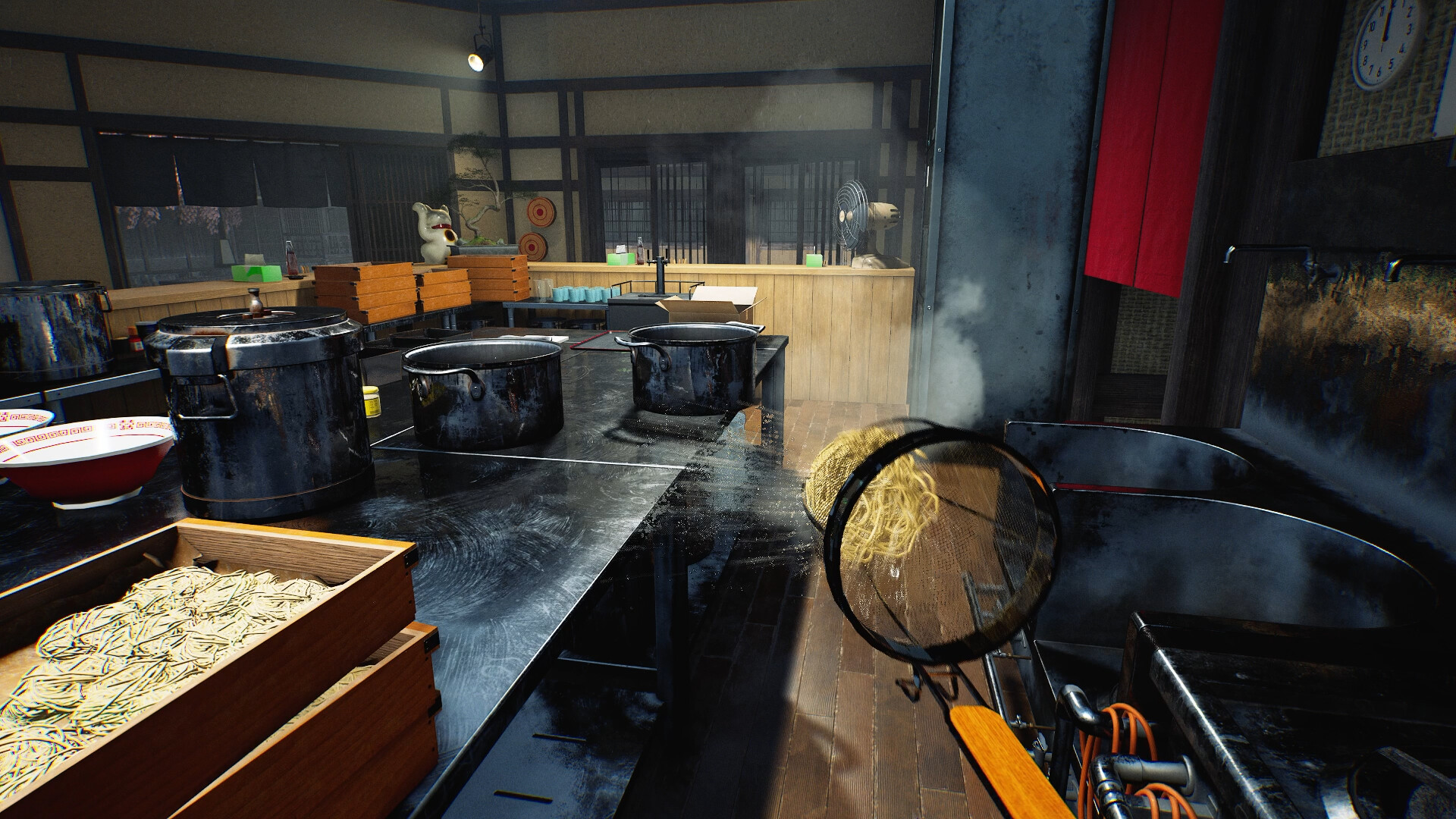
Where are the noodles, strainer and cooking vessel?
Select a number to read the matching description.
Noodles in a wooden tray
The open tray at the lower left contains a loose pile of noodles, with another wooden tray underneath. This is the visible noodle supply in this scene.
Back to image label 1 ↑The wire strainer
A round mesh strainer holding noodles fills the right foreground. Follow its long wooden handle towards the bottom edge to recognise the tool separately from the large vessel behind it.
Back to image label 2 ↑The steaming cooking vessel
The wide metal vessel sits behind the strainer on the right, with steam visible above it. Its open rim helps distinguish this part of the cooking station from the smaller pots on the left worktop.
Back to image label 3 ↑
Read the scene
The pale noodles at the lower left lie in an open wooden tray. Follow the long wooden handle in the foreground to the round mesh strainer, then look behind it for the wide metal vessel and rising steam. The smaller stock pots remain on the central worktop. These shapes distinguish the noodle supply, the handheld tool and the surrounding cookware within the same station.
Read about noodles and hot equipment →Recognise the layers in a finished bowl
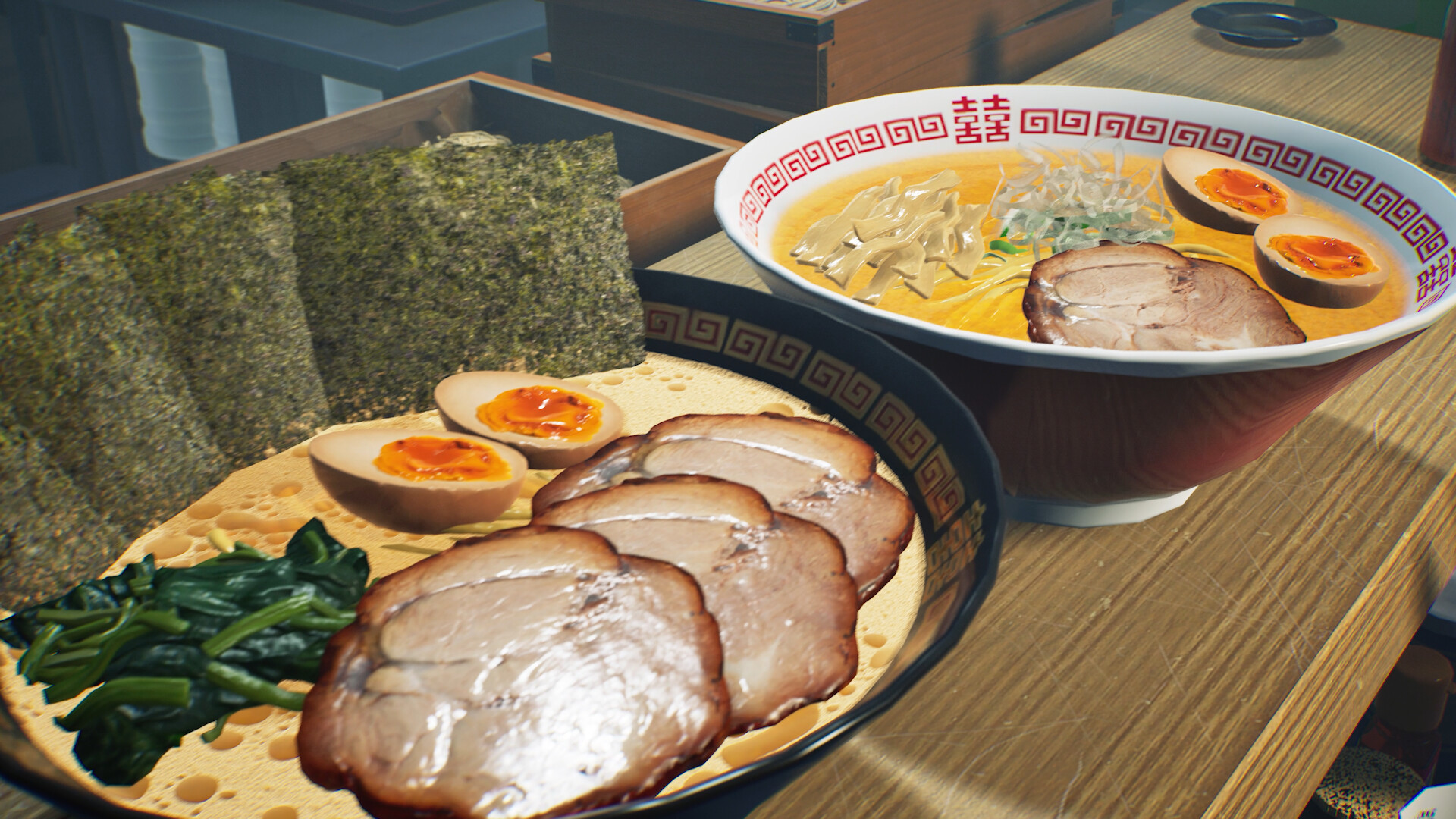
Find three toppings in the nearer bowl
Select a number to read the matching description.
Seaweed sheets
Large dark green sheets stand upright at the back of the nearer bowl. Their broad, flat shapes rise above the smaller toppings.
Back to image label 1 ↑Halved eggs
Two egg halves sit between the seaweed and the overlapping meat slices. The orange centres make them easy to distinguish from the pale noodles.
Back to image label 2 ↑Sliced pork
Overlapping pork slices with browned edges cover much of the front of the nearer bowl. The smaller slices in the farther bowl leave more of its noodles visible.
Back to image label 3 ↑
Read the scene
Begin at the rim and work inward: broth fills the bowl, pale noodles show beneath the toppings, and overlapping pork slices spread across the surface. Halved eggs add bright orange centres. In the nearer bowl, broad seaweed sheets stand behind the pork and dark greens sit to one side. The farther bowl exposes more of its noodles and has pale strips near the centre.
Compare the announced cooking variables →An open gyoza cooker beside a closed lid
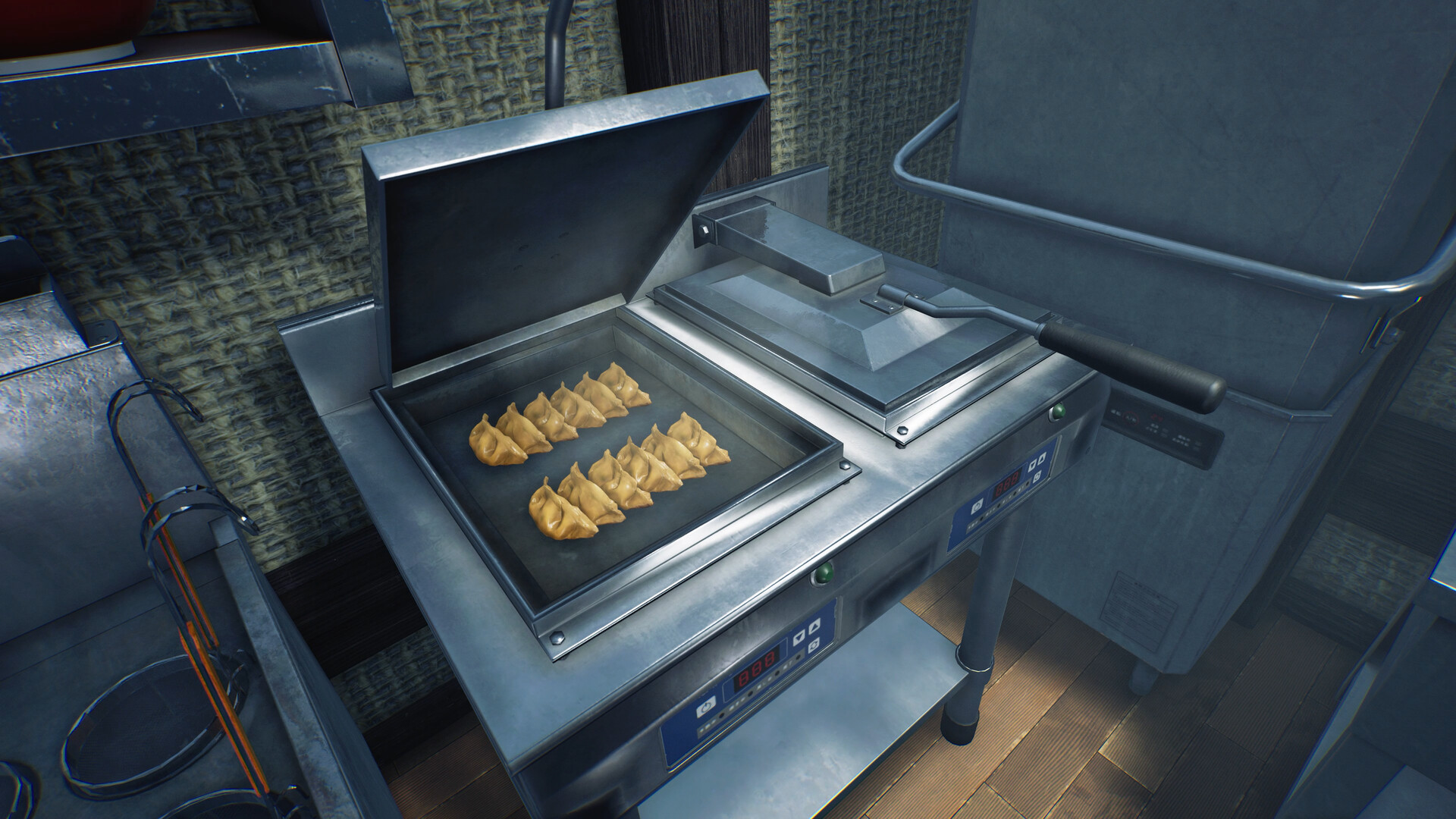
What does the pictured gyoza cooker look like?
Select a number to read the matching description.
Two rows of dumplings
The left cooking surface is open, revealing two rows of dumplings. The flat rectangular compartment is a useful visual cue when distinguishing this appliance from the noodle station.
Back to image label 1 ↑The raised left lid
The left lid stands upright behind the dumplings. Beside it, another cooking surface has a closed metal lid and a long black handle. The raised lid makes the open surface easy to identify.
Back to image label 2 ↑The front display and buttons
A red display and small buttons sit on the front, below the open compartment. Use their position to recognise the pictured control panel when looking at the cooker.
Back to image label 3 ↑
Read the scene
The raised lid reveals a shallow rectangular cooking surface with dumplings arranged in rows. Beside it, a closed metal lid and long black handle show how the neighbouring compartment looks when covered. The display panels sit below both cooking surfaces, facing the person at the station. This low, wide appliance is visually distinct from the deep pots and round strainer in the noodle scene.
See the side-order reference →Crates and trays coming through the shop
Read the scene
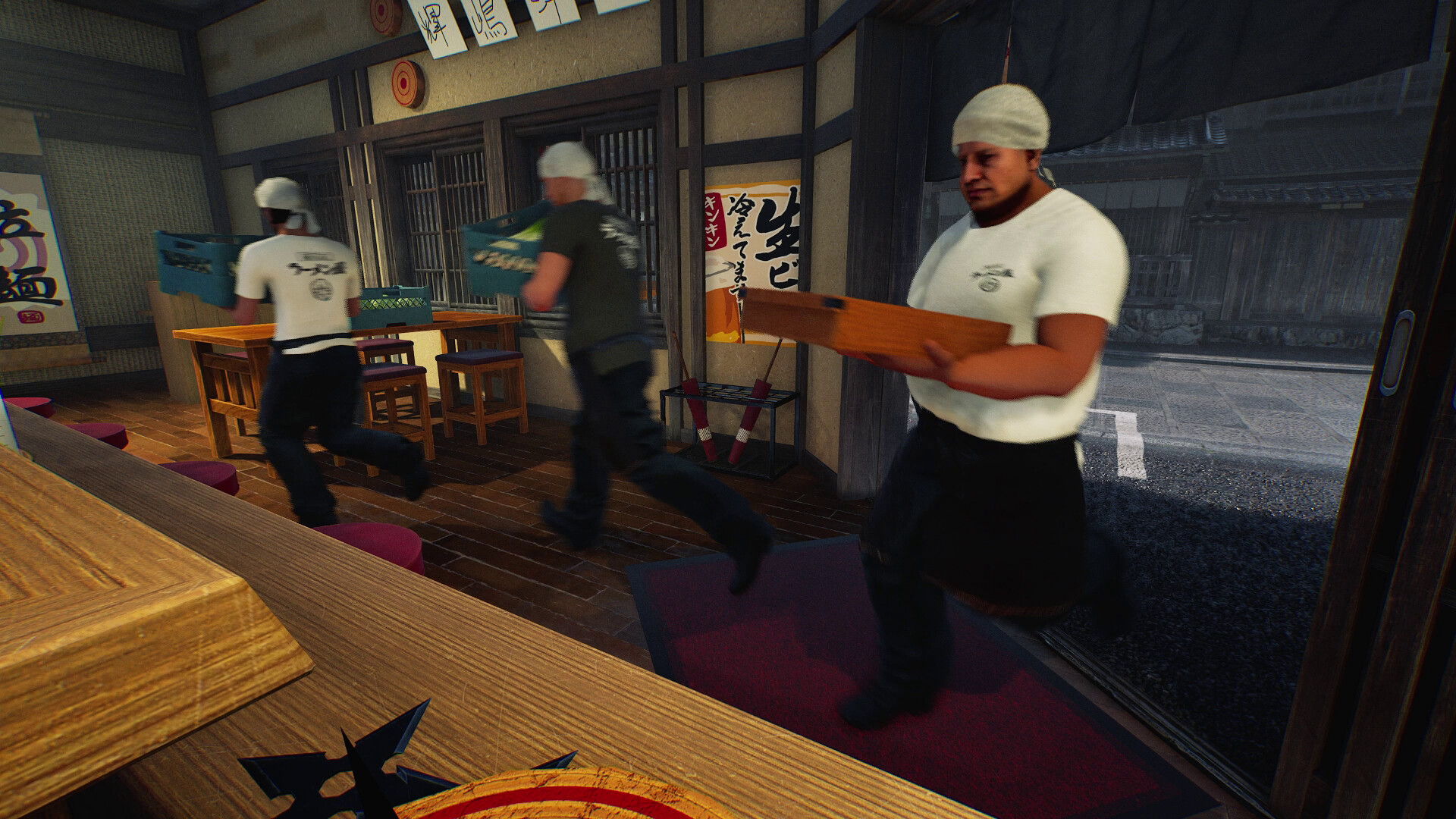
The character nearest the doorway carries a long wooden tray, while the other two carry blue-green crates. One crate visibly holds green produce, and another rests on a table in the background. These are supply containers rather than plated orders. The scene connects the entrance and dining area with preparation work, showing a different part of running the shop from cooking at a fixed station.
Check the confirmed co-op features →Compare height, ingredients and presentation
Read the scene
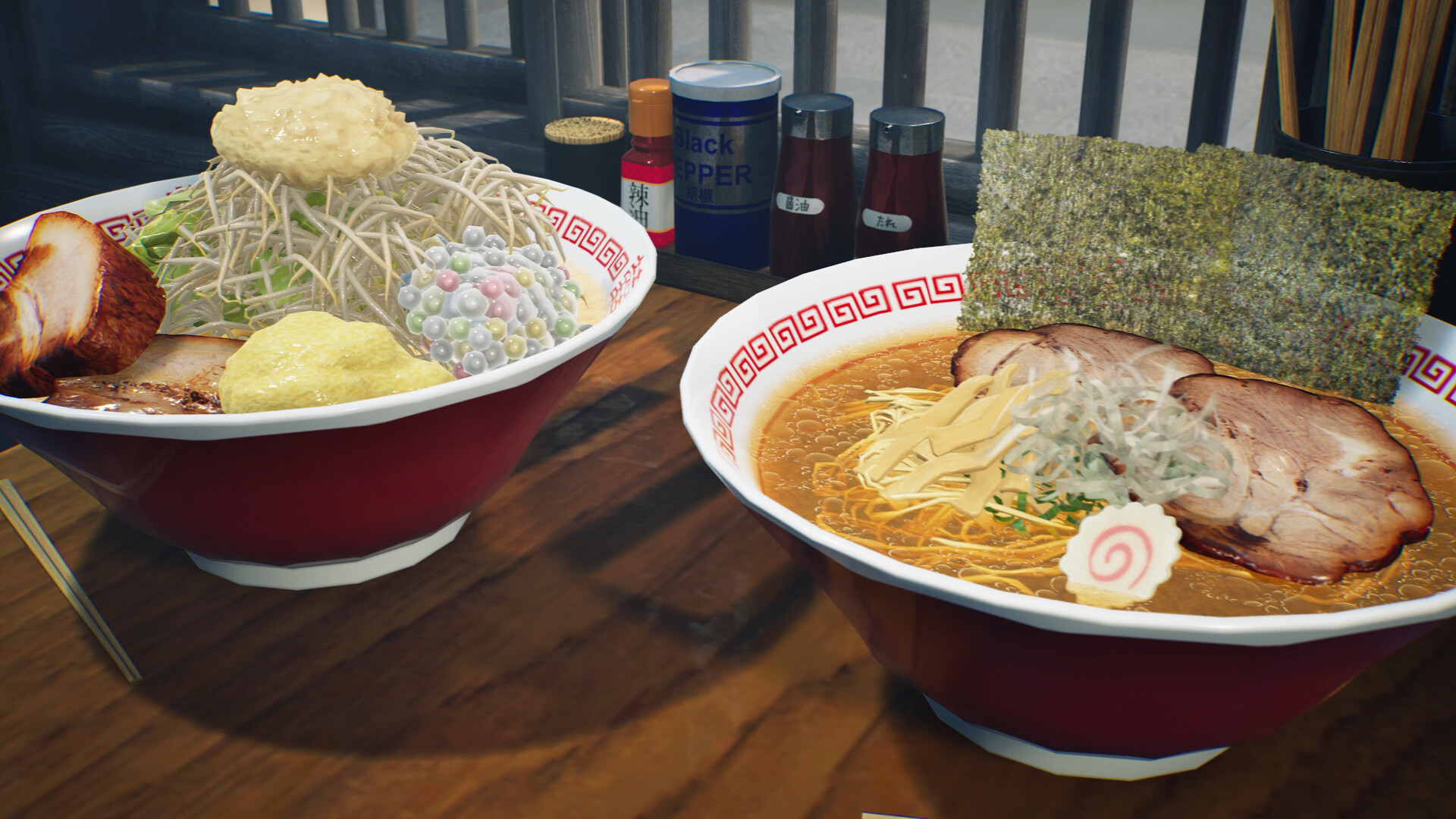
These bowls have noticeably different silhouettes. A tall mound and colourful round toppings dominate the left bowl; the right leaves more broth visible around pork slices, pale strips and a pink-spiral slice. Seaweed rises above its rim. This is a useful comparison of height, colour and arrangement within the developer’s menu-customisation theme. It shows presentation choices, not a measured recipe or a better-selling dish.
Explore menu appearance and My Designs →A shuriken and targets beside the counter
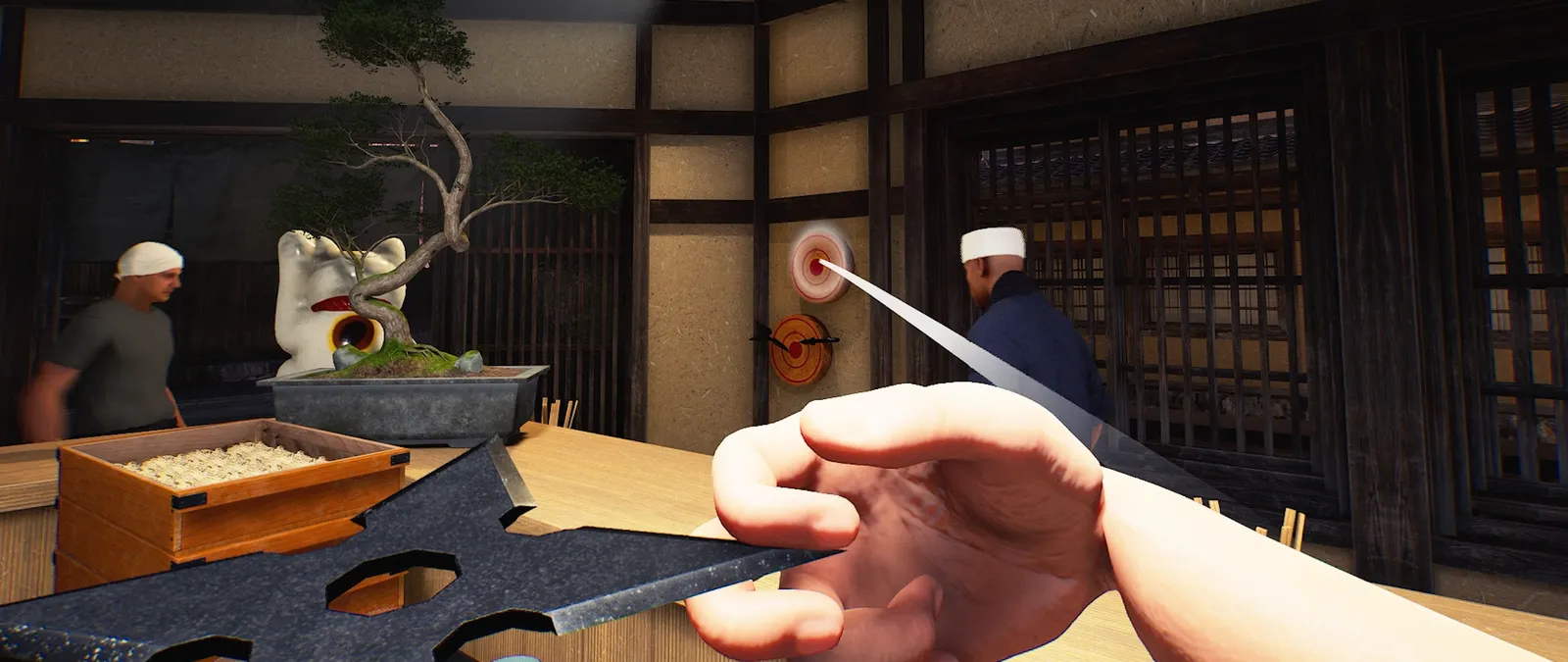
Read the scene
A large dark shuriken fills the foreground, with circular targets mounted on the wall across the counter. Another shuriken is visible at the lower target. The nearby noodle tray, potted tree and lucky-cat ornament place the activity within the restaurant itself. Wild Dog also names shuriken among the tools for shop trouble, but this image shows targets rather than a thief or a completed defence.
Read the announced shop events →Where these pictures come from
All eight scenes are from Wild Dog’s official Steam gallery or the developer’s game page. Every picture has a source link and opens at its original size. The images are unchanged; Ramen Sim HQ added the numbered labels and descriptions.
This guide helps you recognise what is pictured. Preview images can differ from the released game, and a screenshot cannot establish an input, timer, recipe ratio or selling price. See our editorial policy for how we distinguish official information, observations and tested advice.
Spotted a wrong label? Send a correction with the scene number and the object you mean.
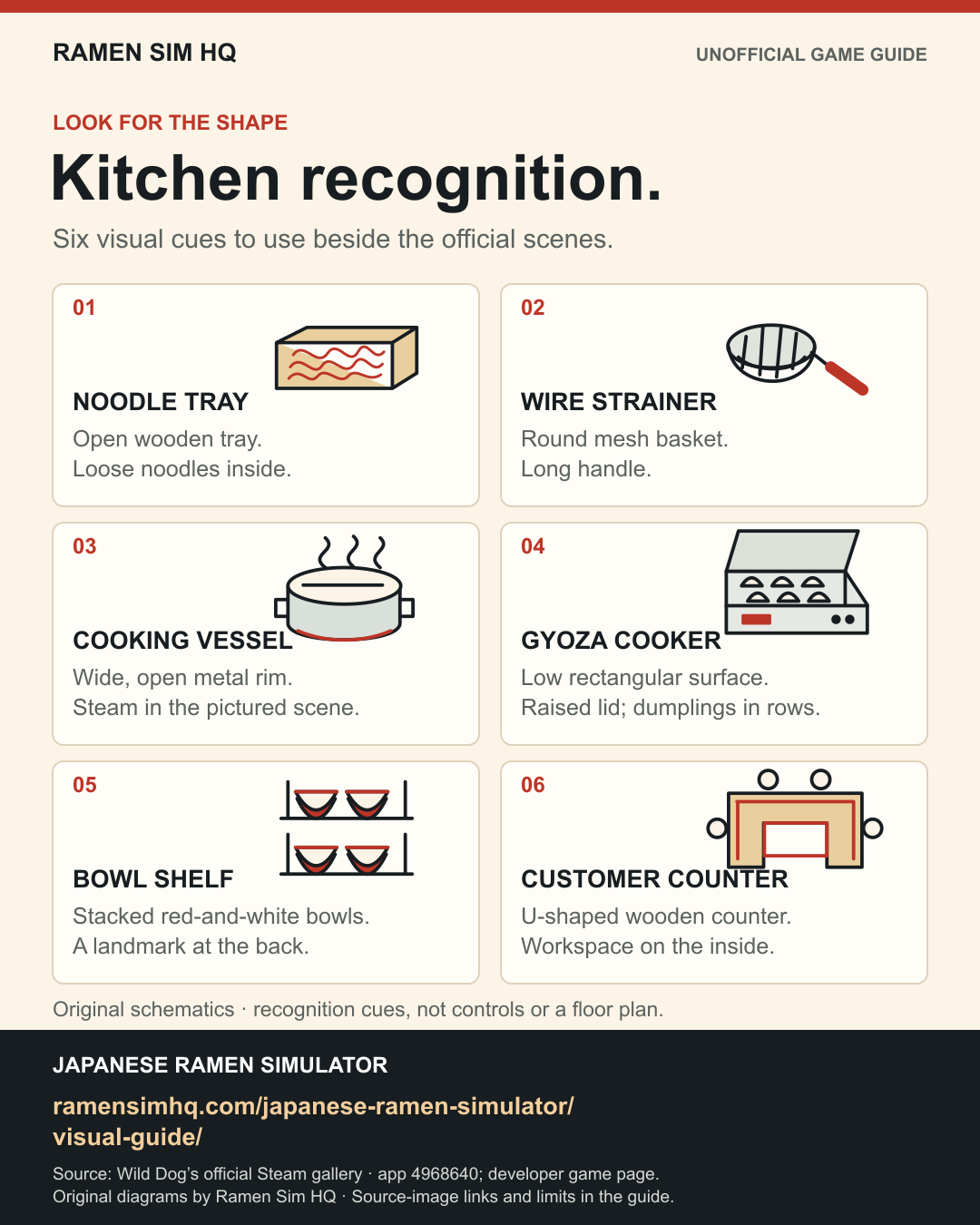
Keep a kitchen recognition card
Save six visual cues beside your game notes: the noodle tray, wire strainer, cooking vessel, gyoza cooker, bowl shelf and customer counter.
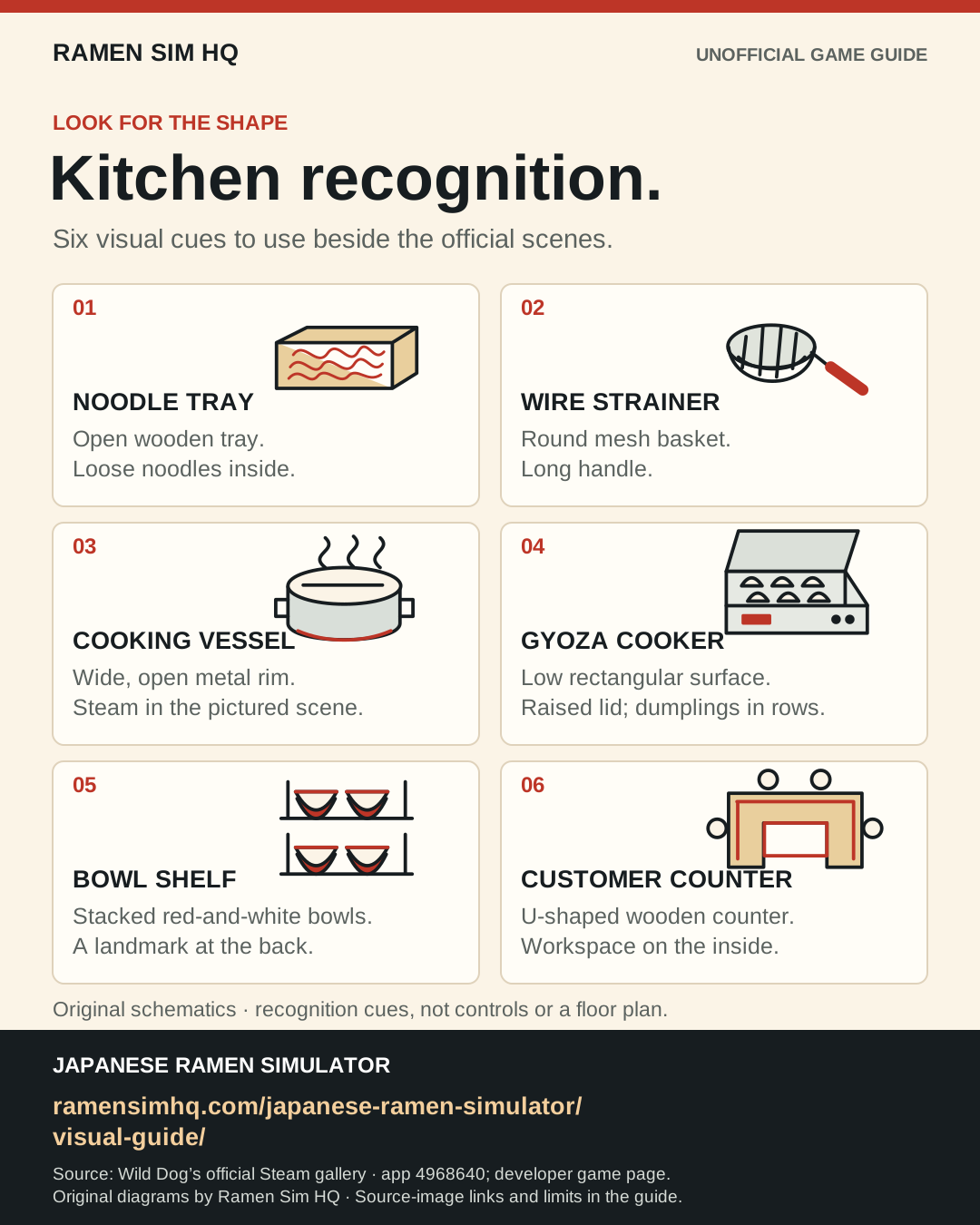
Original schematic drawings based on the shapes discussed in this guide. Use the official scenes above to see the actual equipment; this card is not a floor plan or a set of controls.
Both downloads stay on your device. Each card includes the guide address and the unofficial-site label.
Read the card as text
- Noodle tray
- Open wooden tray with loose noodles inside.
- Wire strainer
- Round mesh basket with a long handle.
- Cooking vessel
- Wide, open metal rim; steam in the pictured scene.
- Gyoza cooker
- Low rectangular cooking surface, raised lid and dumplings in rows.
- Bowl shelf
- Stacked red-and-white bowls: a landmark at the back.
- Customer counter
- U-shaped wooden counter with the workspace on the inside.
Visual cues: Wild Dog’s official Steam gallery and developer game page, linked alongside the scenes in this guide.